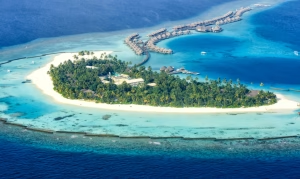
How to Get to the Maldives?

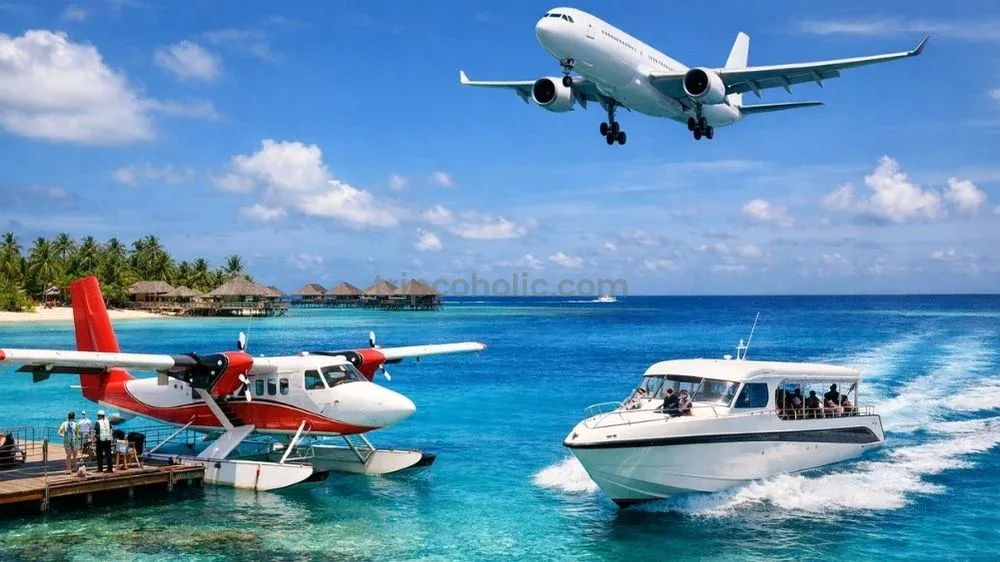

The Maldives is easier to reach than many people expect: most travelers fly into Velana International Airport in Malé (MLE) and then continue to their resort or local island by domestic flight, speedboat, or seaplane. If you want the quickest and most reliable option, securing a Maldives Flight Ticket to Malé early is usually the smartest first step, especially during peak season when connections fill up fast.
Air Travel
From Turkey
From Turkey, the most practical route is to fly to Malé and then switch to an inter island transfer. Istanbul is typically the main departure gateway, but travelers from Ankara, Izmir, Antalya, Adana, Trabzon, Gaziantep, Dalaman, and Bodrum can connect via Istanbul or major hubs in the Gulf.
Common flight strategies from Turkey:
- Istanbul to Malé: Often the simplest routing, especially if you prefer fewer connections.
- Turkey to Gulf hub to Malé: Popular for schedule flexibility, with frequent onward flights to MLE.
- Turkey to South Asia hub to Malé: Useful if you are pairing the Maldives with India or Sri Lanka.
After landing at Velana International Airport (MLE), your onward travel depends on where you are staying:
- Speedboat transfers are typical for nearby islands and many resorts close to Malé.
- Domestic flights connect Malé to distant atolls, followed by a speedboat to the final island.
- Seaplanes are the iconic option for resort arrivals and offer spectacular aerial views of lagoons and reefs.
If you are traveling to popular atolls like Ari Atoll, Baa Atoll, Lhaviyani, Dhaalu, Noonu, Raa, or Gaafu, double check transfer times, because seaplanes usually operate in daylight and domestic flights may have limited evening options.
From Europe
Europe offers strong connectivity to Malé, often with one stop. Great departure cities include London, Manchester, Dublin, Paris, Nice, Frankfurt, Munich, Berlin, Hamburg, Amsterdam, Brussels, Zurich, Geneva, Vienna, Milan, Rome, Madrid, Barcelona, Lisbon, Copenhagen, Stockholm, Oslo, Helsinki, Prague, Budapest, Warsaw, and Athens.
Typical routing patterns:
- Via Istanbul: Convenient for many European cities and helpful if you want to keep your itinerary within one airline family.
- Via Gulf hubs: Often provides smooth schedules and good onward frequencies to Malé.
- Via Singapore or Kuala Lumpur: Useful if you plan to combine the Maldives with Southeast Asia.
For the best balance of price and comfort, aim for a connection that gives you enough time for baggage transfers and a short break, but not so long that you lose a full day of travel.
From the Middle East
The Middle East is one of the easiest regions for reaching Malé thanks to frequent flights. Major departure points include Dubai, Abu Dhabi, Doha, Riyadh, Jeddah, Dammam, Kuwait City, Muscat, Manama, and Amman. Because flight times are relatively short, this region is ideal for travelers who want a quick beach escape or a long weekend style trip.
Many travelers also use the Middle East as a connection point from Europe and Africa because schedules tend to line up well with arrivals into MLE.
From South Asia
South Asia is very well connected to the Maldives, and it is a strong option for pairing a Maldives stay with a cultural or culinary side trip. Key cities include Mumbai, Delhi, Bengaluru, Chennai, Hyderabad, Kolkata, Kochi, Ahmedabad, Pune, Colombo, and Kathmandu.
South Asia is also a good region for:
- Finding shorter flight times to Malé
- Reaching the Maldives during shoulder seasons
- Combining the Maldives with weddings, honeymoons, or family visits
From Southeast Asia and East Asia
From Singapore, Kuala Lumpur, Bangkok, Jakarta, Bali (via Denpasar), Manila, Ho Chi Minh City, Hanoi, Hong Kong, Seoul, Tokyo, Osaka, Shanghai, Beijing, and Taipei, you can usually reach Malé with one stop or occasionally nonstop depending on the route and season.
Southeast Asia is especially convenient if you want a multi destination itinerary such as:
- Singapore plus Maldives
- Bangkok plus Maldives
- Kuala Lumpur plus Maldives
- Bali plus Maldives
From North America
From North America, the Maldives is a long haul journey but still manageable with smart routing. Common departure cities include New York, Washington DC, Boston, Miami, Chicago, Dallas, Houston, Los Angeles, San Francisco, Seattle, Toronto, Vancouver, and Montreal.
Most itineraries involve one or two stops:
- North America to Europe or Gulf hub to Malé
- North America to East Asia to Malé (less common, but can work well depending on schedules)
Tip: if you are arriving after a very long travel day, consider staying one night near Malé or choosing a nearby resort so you can rest before a seaplane transfer the next morning.
From Oceania
From Sydney, Melbourne, Brisbane, Perth, Auckland, and Wellington, travelers typically connect through Southeast Asia or the Middle East. These routes are popular for longer holidays where the Maldives is the relaxing finale after city exploration.
From Africa
From Africa, the most common connections to the Maldives are through the Middle East. Departure cities often include Johannesburg, Cape Town, Nairobi, Addis Ababa, Casablanca, Cairo, and Lagos. The best route usually depends on flight frequency and visa requirements for layovers, so checking connection rules is important.
Road Travel
The Maldives is an island nation, so you cannot drive into it directly. However, road travel can still play a role in your journey in two practical ways: getting to an airport for your flight to Malé, or combining a land trip in a nearby country with a short flight into the Maldives.
From Turkey
From Turkey, road travel is mainly about reaching a major airport efficiently:
- Intercity buses or car travel to Istanbul can be a cost effective step if flights from your home city are limited.
- From cities like Bursa, Edirne, Tekirdag, Kocaeli, Sakarya, and Canakkale, reaching Istanbul by road can be faster than taking a domestic flight.
- Travelers in Ankara, Izmir, Antalya, Konya, Kayseri, Samsun, Trabzon, and Gaziantep may choose either a domestic flight to Istanbul or an overnight bus depending on budget and timing.
If your goal is to reduce total costs, a combined plan often works: road to a major departure airport, then fly to Malé, then transfer to your island.
From Europe
Road travel can help European travelers reach better flight deals by departing from a nearby hub airport. For example:
- From Belgium or Luxembourg, it can be easy to drive or take a train to Amsterdam, Paris, or Frankfurt for more options.
- From Northern Italy, travelers often compare departures from Milan, Venice, or even Zurich.
- From Central Europe, it is common to reach Vienna, Munich, or Frankfurt overland before flying onward.
You can treat this as a flexible travel hack: if your local airport is expensive, a short road or rail trip to a bigger airport can unlock cheaper fares.
From the Middle East
In the Middle East, many travelers use road travel to reach a hub city with the best Maldives connections:
- Driving from nearby cities into Dubai, Abu Dhabi, Doha, Muscat, Riyadh, or Jeddah can make sense when flight prices vary widely.
- If you are planning a multi country trip, road travel between Gulf cities can simplify logistics before your final flight to Malé.
From South Asia
In South Asia, overland travel can be part of a larger itinerary. For example:
- Traveling overland to a major airport like Mumbai, Delhi, Bengaluru, Chennai, Kochi, or Colombo, then flying to Malé.
- Combining a cultural route such as Kerala plus Maldives or Sri Lanka plus Maldives, where road travel is used for sightseeing before the beach finale.
This approach is popular with travelers who want more variety than a pure resort holiday.
From Southeast Asia
If you are already in Southeast Asia, road travel can help you reach the best flight gateway:
- Overland travel to Singapore, Kuala Lumpur, or Bangkok is common for regional travelers.
- Backpackers often build a route that ends at a major hub city, then fly into Malé for relaxation and snorkeling.
Important note: road travel cannot replace flying to the Maldives, but it can reduce the overall cost of reaching your departure airport.
Sea Travel
Because the Maldives is made up of islands, sea travel is essential once you arrive. Internationally, the Maldives is not typically reached by regular scheduled passenger ferries from other countries, so most visitors arrive by air. Sea travel becomes the star of the trip after landing in Malé, whether you are heading to a resort, a local island, or hopping between atolls.
From Turkey
From Turkey, sea travel is usually part of your Maldives experience rather than the entry route. After your flight into Malé, you can reach your island by:
- Speedboat transfer arranged by your hotel or resort
- Domestic ferry services for budget friendly travel to local islands
- Seaplane plus boat combinations for more remote atolls
If you are staying on a local island such as Maafushi, Gulhi, Thulusdhoo, Dhiffushi, or Himmafushi, public ferries and shared speedboats are often available and can be a great way to travel more affordably while meeting other travelers.
From Europe
European travelers often plan sea travel as a highlight:
- Seaplane arrivals to resorts in atolls like Baa or Noonu are iconic.
- Speedboat transfers are ideal if you want to start your holiday quickly without waiting for domestic flight schedules.
- Public ferries support local island stays, which are popular for travelers seeking a more authentic experience.
For island hopping, many travelers combine:
- A few nights near Malé for easy logistics
- A few nights in a more distant atoll for quiet beaches and better reef time
From Asia
Asia based travelers frequently mix local islands and resorts, using boats to keep the itinerary smooth:
- Speedboat to nearby islands for surfing, diving, and beach days
- Domestic flight plus speedboat for far atolls
- Public ferries for budget island hopping
Some islands are well known for specific activities:
- Ari Atoll for diving and manta rays or whale shark excursions (seasonal and nature dependent)
- Vaavu Atoll for channel dives and marine life
- Baa Atoll for biosphere style nature experiences
- North Malé Atoll for surfing and easy transfers
From North America, Oceania, and Africa
For long haul travelers, the sea transfer is often the moment the Maldives truly begins. After a long flight, consider choosing a transfer that matches your energy level:
- If you want the quickest arrival, pick a resort reachable by speedboat.
- If you want the most scenic arrival, pick a seaplane transfer and plan for daylight.
- If you are traveling on a budget and staying on local islands, research public ferry schedules carefully and keep your first night flexible in case of timing changes.
Sea travel is not just transportation here, it is part of the experience. Sunset cruises, sandbank trips, dolphin watching, and lagoon crossings often become favorite memories.
The Maldives rewards good planning: pick the right arrival airport, choose an efficient connection city, and match your transfer style to your island location so you start relaxing the moment you land. Whether you are aiming for a luxury overwater villa, a local island adventure, or a multi atoll diving trip, mapping your route first will help you save time, avoid transfer stress, and build a trip that feels effortless from start to finish. Book smart, travel light when possible, and let the islands do the rest, then wrap up your plan with one clear checklist item: Maldives Flight Ticket, Maldives Bus Ticket, Maldives Ferry Ticket.