How to Get to Georgia?

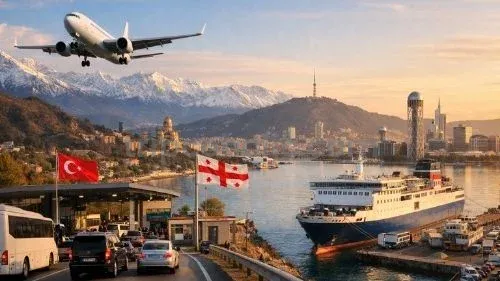

Georgia sits at the crossroads of Europe and Asia, making it surprisingly easy to reach whether you are chasing Tbilisi’s café culture, the Caucasus mountains, or the Black Sea coast in Batumi. The fastest option is usually flying into one of the country’s main airports, so starting your search with a Georgia Flight Ticket is often the smartest first step, especially in peak seasons. Georgia’s land borders also make road trips and long distance buses popular, and its Black Sea ports add sea routes to the mix when schedules align.
Air Travel
Georgia’s main gateways are Tbilisi International Airport (TBS) for the capital and most onward connections, Kutaisi International Airport (KUT) for budget friendly routes and regional access, and Batumi International Airport (BUS) for the Black Sea coast and Adjara region. Choosing the right airport can save both time and money depending on your itinerary.
From Turkey
If you are traveling from Turkey, the most convenient flights typically route through Istanbul, with strong onward connectivity to Tbilisi and often seasonal or regular options to Batumi and Kutaisi depending on the airline network at the time. For coastal plans, Batumi is also notable for its proximity to Turkey’s northeast, sitting close to the Hopa area.
Practical planning tips:
- For Tbilisi city breaks, fly to TBS and use airport shuttles, taxis, or rides to the center.
- For budget routes and western Georgia, fly to KUT, then continue to Kutaisi, Tbilisi, Mestia direction transfers, or Batumi by road.
- For beach and casino weekends, aim for BUS and stay along the seaside boulevard.
From Europe
Europe to Georgia is typically easiest via major hubs. If you are departing from cities like London, Paris, Berlin, Amsterdam, Rome, Vienna, Warsaw, or Athens, you will usually find the smoothest itineraries either on direct services (when available) or with one stop via Istanbul or other large European and Gulf hubs. Tbilisi is generally the strongest destination for direct and one stop flight variety, while Kutaisi often attracts low cost patterns depending on the season.
Destination ideas to broaden your search:
- UK and Ireland: London, Manchester, Dublin
- Western Europe: Paris, Brussels, Amsterdam
- Central Europe: Berlin, Munich, Vienna, Prague, Warsaw
- Southern Europe: Rome, Milan, Athens, Thessaloniki, Barcelona
From Asia
From Asia, you will often find efficient one stop itineraries through large hubs. Travelers from Dubai, Doha, Riyadh, Kuwait City, or Tehran typically connect smoothly into Tbilisi. If you are coming from the Caucasus and nearby regions like Baku or Yerevan, flying can still be convenient for time savings, but road options may also compete depending on your route and border plans.
Helpful search strategy:
- Use Tbilisi as your primary target for maximum flight choice.
- Compare Kutaisi when traveling to western Georgia, ski regions, or smaller towns.
- Check Batumi if your trip is fully coastal.
From North America
From New York, Toronto, Chicago, or Los Angeles, Georgia is usually reached with one or two connections, most commonly via European hubs or Istanbul. Because long haul schedules change, it is smart to compare routes into Tbilisi (TBS) first, then price check alternatives to Kutaisi (KUT) if your final destination is western Georgia.
From South America
From São Paulo, Buenos Aires, Santiago, or Lima, expect multi leg itineraries via Europe or the Middle East. To keep layovers reasonable, focus on large hubs with frequent departures and prioritize Tbilisi for the widest set of onward flights.
From Africa and Oceania
From Cairo, Casablanca, Nairobi, Addis Ababa, Johannesburg, or Sydney and Auckland, the standard pattern is one or two stops via major hubs. Again, Tbilisi is typically the most flexible arrival point, with Kutaisi and Batumi best treated as secondary options to compare if they align with your itinerary and budget.
Road Travel
Road travel to Georgia is a favorite for travelers who enjoy scenic routes, flexible stops, and budget friendly transit. Georgia’s overland connectivity is especially strong from neighboring regions, and it is very common to enter by bus, private car, or shared minibuses on popular corridors.
From Turkey
Turkey is one of the easiest countries to reach Georgia from by land, thanks to multiple official border gates. The most widely used crossing for many travelers is Sarp (Turkey) to Sarpi (Georgia) near the Black Sea coast. For routes aiming deeper into southern Georgia and toward Tbilisi, other crossings are also important, including Posof Türkgözü to Vale and Çıldır Aktaş to Kartsakhi.
Common road and bus patterns from Turkey include:
- Northeast coastal route: Trabzon, Rize, Artvin direction, then Sarp to reach Batumi quickly.
- Eastern Anatolia route: Kars, Ardahan region onward via Türkgözü or Aktaş for a shorter line toward Samtskhe Javakheti and beyond.
- Long distance coach travel: Istanbul, Ankara, Bursa, Izmir departures often run to Tbilisi or Batumi with varying frequencies depending on season.
If you are driving, plan for border time, check document requirements, and consider whether your route is focused on Batumi coastal entry or a more direct inland approach via Ardahan province crossings.
From Europe
Overland travel from Europe can be done by private vehicle or international buses with transfers. Typical road corridors run via the Balkans and Turkey, then continue to Georgia through one of the Turkey Georgia border gates. Starting cities that often serve as practical launch points include Sofia, Bucharest, Athens, Thessaloniki, Belgrade, and Budapest, then continuing toward Istanbul and onward to the northeast. For travelers who prefer to minimize driving, mixing a European bus or flight to Istanbul with a bus to Georgia can be an efficient hybrid approach.
From Asia
Road access from Asia is strong, especially from nearby regions.
- From the South Caucasus: routes often connect through major cities and border points, making overland travel practical for multi country itineraries.
- From Iran or Central Asia: many travelers combine flights into regional hubs with overland segments, depending on time, visas, and border policies.
If your goal is an overland adventure, consider building your route around Georgia’s major highways connecting Tbilisi, Kutaisi, and Batumi, then branch into the mountains once you are inside the country.
From North America, South America, Africa, and Oceania
For travelers coming from farther away, road travel usually begins after flying into a regional hub such as Istanbul or a major European city. From there, a coach or rental car route into Georgia can add variety, especially if you want to include Black Sea towns, the Turkish northeast, or an extended cross border itinerary.
Sea Travel
Georgia’s Black Sea coastline makes sea travel possible, mainly through the ports of Batumi and Poti. In practice, sea routes can be more specialized than air or road options, and schedules may be oriented toward freight and vehicles, with passenger availability varying over time, so always verify current operations before you plan around a ferry.
From Turkey
Direct, regularly scheduled passenger ferries from Turkey to Georgia are not always consistent, so many travelers choose to fly or cross by land instead. If you are determined to include a sea leg, the most realistic strategy is often to reach a Black Sea port with active services in the wider region, then connect onward to Georgia by sea when schedules allow. Since conditions and availability can change, treat sea travel as an optional experience rather than the backbone of your itinerary.
From Europe
There are Black Sea ferry links that can connect European ports to Georgia, typically involving Batumi or Poti. Schedules published by operators show routes such as Varna to Batumi and Constanta to Poti, which may be especially relevant for travelers moving vehicles or cargo, with passenger options depending on the specific sailing and rules.
Practical use cases for European sea routes:
- Pair a Balkan road trip with a Black Sea ferry segment.
- Travel with a vehicle when regulations and capacity allow.
- Create a slower, scenic journey that avoids long overland driving days.
From Asia
From the broader Asian region, sea travel typically makes sense only as part of a multi leg itinerary, for example combining road segments to a Black Sea port and then continuing by ferry to Georgia. For most visitors, flying into Tbilisi remains the simpler option, but sea legs can appeal to travelers prioritizing novelty or vehicle logistics.
From North America, South America, Africa, and Oceania
For long haul travelers, sea travel is usually a bonus segment added after arriving in Europe or Turkey. If you are building a multi country trip, a Black Sea ferry into Georgia can be a memorable twist, but it is best planned with flexibility and backup routes, because passenger services can be limited or suspended depending on operator decisions and regional disruptions.
Georgia rewards travelers who plan smart and stay flexible: fly into Tbilisi for maximum connectivity and city energy, choose Kutaisi to explore western regions on a budget, and pick Batumi when the coast is the whole point of the trip. If you enjoy the journey as much as the destination, consider combining flight and road options through Turkey’s well known border crossings, and treat sea routes as a bonus experience when schedules line up. Compare Georgia Flight Ticket options, check Georgia Bus Ticket schedules, and if you are heading along the Black Sea, keep an eye on Georgia Ferry Ticket routes.