How to Get to Germany?

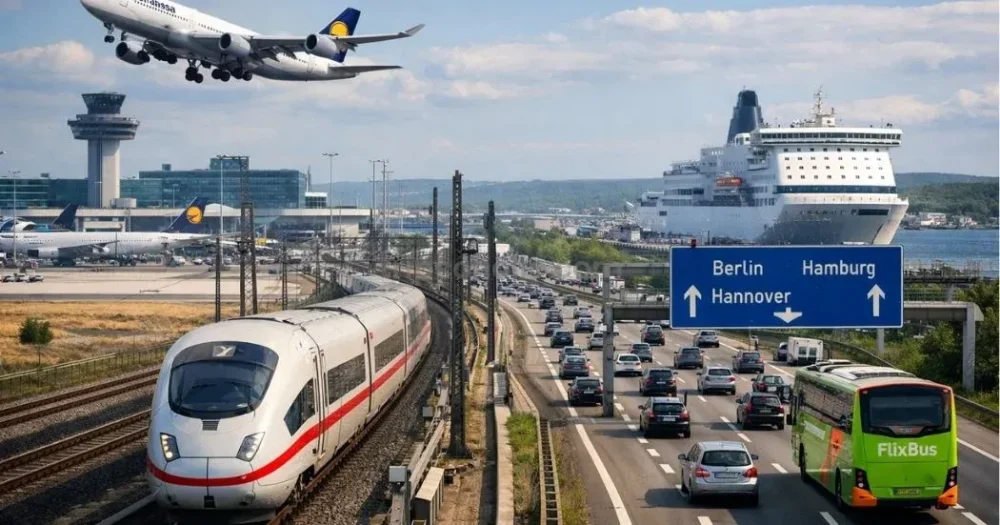

Reaching Germany is straightforward because it sits at the heart of Europe and connects seamlessly by air, road, and sea. For the fastest option, most travelers choose flights into major hubs like Frankfurt or Munich, then continue by train or domestic connections. If you prefer flexibility and scenic routes, you can drive or take long distance buses across Europe. And for a calmer, road trip friendly alternative, ferries into northern German ports make it easy to arrive with your car. If you are comparing prices early, a Germany Flight Ticket often gives you the best mix of speed, comfort, and value.
Air Travel
Germany has a dense airport network, with top international gateways including Frankfurt Airport (FRA), Munich Airport (MUC), Berlin Brandenburg Airport (BER), Düsseldorf Airport (DUS), Hamburg Airport (HAM), Cologne Bonn Airport (CGN), Stuttgart Airport (STR), and Hanover Airport (HAJ).
Tip: choose your arrival airport based on your final destination. Northern trips pair well with Hamburg or Berlin, business travel often favors Frankfurt, and Alpine or Bavaria routes usually start best in Munich.
From Turkey
From Istanbul, Ankara, Izmir, and Antalya you can typically find one stop or seasonal direct options into Germany’s main hubs, then connect onward by Germany’s high speed rail and regional trains. A practical strategy is to fly into Frankfurt for central access, Munich for the south, Berlin for culture and start up corridors, or Düsseldorf for the Rhine Ruhr region.
From Europe
Within Europe, flights are frequent and often short, which makes weekend trips easy. Popular departure points include London, Paris, Amsterdam, Brussels, Vienna, Zurich, Prague, Warsaw, Rome, Madrid, Barcelona, and Lisbon. For quick onward travel, pick arrivals like Frankfurt, Berlin, Munich, or Hamburg based on where you will actually stay.
From North America
Transatlantic routes commonly connect into Germany’s biggest hubs first, especially Frankfurt and Munich, with easy transfers to domestic flights or trains. Typical departure cities include New York City, Chicago, Los Angeles, San Francisco, Toronto, and Montreal. If your final stop is in the Rhine Ruhr, Düsseldorf is also a smart target when available.
From South America
From South America, most itineraries connect through a major European hub before entering Germany. Common departure points include São Paulo, Rio de Janeiro, Buenos Aires, Santiago, Lima, and Bogotá, with connections that often land in Frankfurt or Munich for the smoothest onward network.
From Asia
Asia offers many one stop connections into Germany’s top airports. High demand departure cities include Dubai, Doha, Riyadh, Tel Aviv, Delhi, Mumbai, Bangkok, Singapore, Tokyo, Seoul, Beijing, and Shanghai. If you want fewer transfers, aim for Frankfurt or Munich where long haul schedules are typically densest.
From Africa
Routes from Africa frequently connect through North African, Gulf, or European hubs before arriving in Germany. Common starting points include Cairo, Casablanca, Lagos, Nairobi, Addis Ababa, and Johannesburg, with Frankfurt often serving as the most convenient arrival hub for connections.
From Oceania
From Sydney, Melbourne, Brisbane, and Auckland, trips to Germany are usually one stop via Asia or the Gulf, landing most often in Frankfurt or Munich for onward rail access across the country.
Road Travel
Germany’s highway and rail adjacent road network makes overland travel surprisingly practical, especially if you want to carry more luggage, travel as a family, or visit multiple countries on the way.
From Turkey
Driving from Turkey into Germany is a classic long distance route. One common corridor starts in Istanbul and continues through Sofia, Belgrade, Budapest, and Vienna before entering Germany.
For a rough sense of scale, a nonstop Turkey to Germany drive is often cited at about 3,087 km with roughly 31 hours of wheel time, not counting borders, rests, or city traffic. If you want a less tiring version of the same idea, international buses can be a strong alternative: FlixBus lists long haul services such as Istanbul Europe to Berlin, with journey times that can be around two days depending on schedules and stops.
From Europe
Overland from Europe, you can mix buses, trains, and car travel with ease. Direct highways and frequent coach lines connect Germany with nearby hubs like Vienna, Prague, Zurich, Amsterdam, Brussels, Copenhagen, and Warsaw. If you are road tripping, the best entry points depend on where you are coming from: western approaches naturally feed into the Rhine Ruhr, southern routes are perfect for Bavaria, and northeastern corridors flow easily into Berlin and Hamburg.
From North America
A road arrival from North America typically starts after you land in Europe. Many travelers fly into a major gateway, rent a car, and then drive into Germany via nearby countries such as the Netherlands, Belgium, France, Switzerland, or Austria. The advantage is freedom: you can plan a multi country loop and still finish in a German hub city where flights home are frequent.
From South America
Similar to North America, most road based itineraries begin once you arrive in Europe. If your plan is a grand tour, consider landing in a city with strong rental availability and then driving into Germany, using the Autobahn network for fast intercity travel and Germany’s dense rest areas for comfortable breaks.
From Asia
For travelers already in Europe, arriving by road from Asia generally means you have crossed into Europe via Türkiye and the Balkans or through the Caucasus into Eastern Europe, then continued by car or bus. This style of trip is best for experienced road travelers who enjoy border to border planning and want full control over stops.
From Africa
From Africa, road travel to Germany usually begins after a flight into southern Europe, followed by a drive or bus north through countries like Italy, France, or Austria depending on your entry point. It is an excellent approach if you want to combine a Mediterranean leg with a German city break.
From Oceania
Most Oceania visitors who want an overland segment will fly into Europe first, then explore by car or coach across neighboring countries before reaching Germany. This gives you the best of both worlds: long haul speed plus European road trip flexibility.
Sea Travel
Germany has access to the North Sea and Baltic Sea, so ferries are a real, useful option, especially if you are traveling with a vehicle or want a slower, more scenic arrival.
From Turkey
There is no typical direct passenger ferry route from Turkey to Germany, but you can still incorporate sea travel by ferrying into northern Europe and then driving onward. A practical approach is to reach Greece or Italy by road or short sea crossings, continue through the Balkans or central Europe, and then use Baltic routes into Germany if you are building a longer road trip.
From Europe
Northern Europe offers several ferry connections into German ports. Stena Line highlights routes such as Trelleborg to Rostock and Gothenburg to Kiel, as well as Liepāja to Travemünde.
If you are traveling between Denmark and Germany, Scandlines operates well known crossings such as Puttgarden to Rødby and Rostock to Gedser. For trip planning, ferry aggregators like Direct Ferries list multiple German ferry ports and connections, with Rostock commonly shown as one of the busiest ferry hubs.
From North America
Sea travel from North America is rarely used for passenger arrival, but it can still make sense for niche plans like long road trips where you ship a vehicle to Europe, then continue via ferry into northern Germany. For most travelers, the smarter method is to fly to a nearby European gateway and then add a ferry segment if you want a coastal experience.
From South America
As with North America, passenger sea arrivals are uncommon. The usual play is flight first, then add ferries inside Europe, for example a Baltic crossing into northern Germany if you are touring Scandinavia or the Danish islands.
From Asia
If you are already traveling overland across Europe, ferries become relevant in the later stages, particularly when your route includes Scandinavia, Denmark, Poland, or the Baltics. Ferry into a German port, then continue by Autobahn or train.
From Africa
Sea travel from Africa into Germany is generally impractical for passengers, but ferry travel inside Europe can still be part of your itinerary if you want to combine Mediterranean travel with a northern European loop.
From Oceania
Most visitors from Oceania will fly into Europe, but ferries can be a memorable add on if you plan to explore the Baltic region. Arrive in Sweden, Denmark, or the Baltics, cross into Germany by ferry, and then continue inland.
Germany rewards good planning because it is easy to enter and even easier to move around once you arrive. Choose flights when time matters, choose road routes when you want freedom and multiple countries in one trip, and choose ferries when you want a relaxed entry into northern ports with the option to bring a vehicle. However you travel, locking in the right timing and entry city can turn a complicated itinerary into a smooth, enjoyable journey from day one. For a smart start to your plan, compare a Germany Flight Ticket, a Germany Bus Ticket, and a Germany Ferry Ticket.