How to Get to Greece?

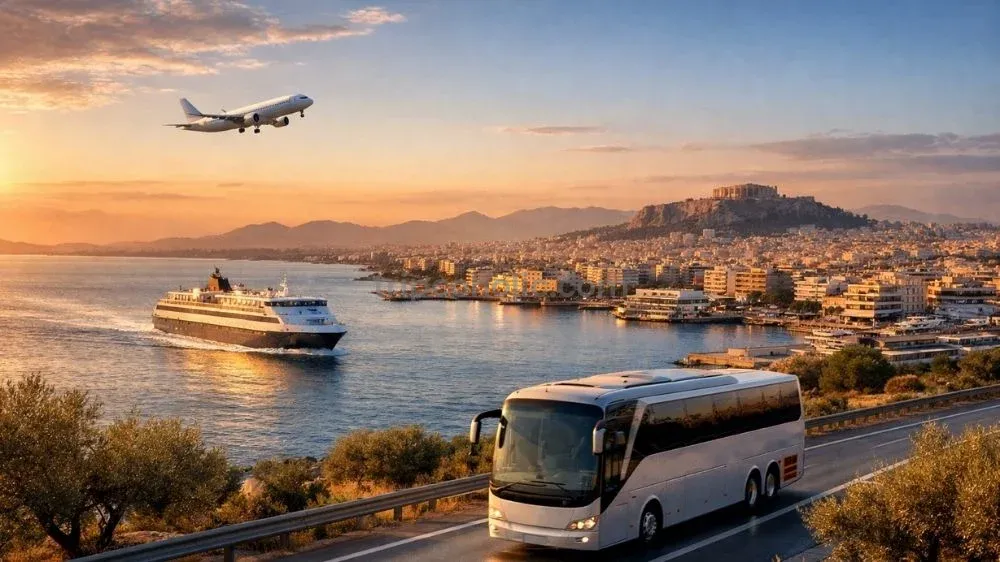

Greece is easy to reach thanks to its dense flight network, well connected highways across the Balkans, and ferry routes that link the mainland and islands with nearby countries. Most visitors arrive by plane through Athens or Thessaloniki, then continue by domestic flights, buses, rental cars, or ferries to places like Santorini, Mykonos, Crete, Rhodes, Corfu, Meteora, Delphi, and the Peloponnese. If you are comparing options for a Greece Flight Ticket, checking multiple arrival airports can help you land closer to the region you actually want to explore.
Air Travel
From Turkey
Flying is the fastest and most straightforward way to enter Greece from Turkey, especially if your first stop is Athens for history and museums, or Thessaloniki for Northern Greece and coastal escapes. Many travelers depart from Istanbul because it offers frequent departures and strong connections, but you can also start from major Turkish cities such as Ankara, İzmir, Antalya, or Bodrum depending on the season and flight schedules.
Athens International Airport (ATH) is the top choice if you want a classic Greece itinerary that includes Athens, the Acropolis, day trips to Delphi and Meteora (via connections), and island hopping from nearby ports. Thessaloniki Airport (SKG) is ideal for Halkidiki beaches, Mount Olympus, Kavala, and road routes toward Ioannina and the Zagori villages.
If your plan is island first, consider seasonal flights that can land you directly on popular islands, saving hours of transfers. Look for routes to Crete (Heraklion or Chania), Rhodes, Corfu, Santorini, Mykonos, Kos, or Zakynthos when available. Even if you land in Athens, domestic flights can quickly connect you to the islands, which is useful if you prefer to avoid long ferry times.
From Europe
Europe has the widest range of flight options into Greece, with year round service to Athens and Thessaloniki and heavy seasonal flights to the islands. From the United Kingdom, London is the main departure hub, with additional options from Manchester, Birmingham, and Edinburgh during peak months. From France, Paris connects easily. From Germany, you will typically find strong routings from Frankfurt, Munich, Berlin, and Düsseldorf. Amsterdam, Brussels, and Zurich are also common gateways.
Southern Europe provides especially convenient access, often with short flight times. Rome, Milan, Naples, Madrid, Barcelona, Lisbon, and Porto can connect well to Athens and seasonal island airports. In Central and Eastern Europe, Vienna, Prague, Budapest, Warsaw, Krakow, Bucharest, Sofia, Belgrade, and Zagreb frequently offer efficient connections, often making Thessaloniki a smart entry point for travelers who want Northern Greece first.
If you want to land closest to your vacation style, match your airport to your destination: Athens for classic sightseeing and island gateways, Thessaloniki for Northern coasts and mountain regions, Heraklion or Chania for Crete, and island airports like Rhodes, Corfu, Santorini, and Mykonos for direct resort style arrivals in summer.
From North America
For North America, Athens is the primary long haul arrival point. Depending on the time of year, some travelers may find direct flights from major cities, but many itineraries connect through European hubs like London, Paris, Frankfurt, Munich, Amsterdam, Rome, or Istanbul. Popular departure cities often include New York, Boston, Washington, Chicago, Miami, Los Angeles, Toronto, Montreal, and Vancouver, typically with one stop.
If you are heading to the islands, a common strategy is to land in Athens, spend one night to reset after the long flight, then continue the next day via a short domestic flight to places like Santorini, Mykonos, Rhodes, Corfu, or Crete. This approach reduces the risk of tight connections and keeps your first full day in Greece relaxed.
From the Middle East
Greece is well linked to the Middle East through regional hubs, and Athens is usually the easiest destination to reach. Travelers often route from Dubai, Abu Dhabi, Doha, Riyadh, Jeddah, Kuwait City, Muscat, Manama, Tel Aviv, Amman, Beirut, and Cairo. Many journeys are direct or one stop depending on the city and season.
Athens works well as a bridge between regions, especially if you want to combine Greece with nearby destinations around the Eastern Mediterranean. Thessaloniki can also be practical for Northern Greece, particularly if your itinerary focuses on Macedonia, Halkidiki, or road trips toward Meteora and Epirus.
From Asia and Oceania
From Asia and Oceania, most routes to Greece are one stop, typically through major hubs in the Middle East, Turkey, or Europe. Travelers may start from Tokyo, Seoul, Beijing, Shanghai, Hong Kong, Singapore, Bangkok, Kuala Lumpur, Delhi, Mumbai, Bengaluru, and Karachi, then connect onward to Athens. From Sydney, Melbourne, and Auckland, one stop routings are the norm, often with a hub connection before reaching Athens.
For long haul travelers, Athens is the most practical first landing because it offers the widest choice of onward connections. Once you arrive, you can continue by domestic flight to islands or use ferries and buses to reach mainland highlights.
Airport Tips for a Smoother Arrival
If your goal is island time, try to arrive as close to your island as possible, especially during peak summer crowds. If you prioritize flexibility, arrive in Athens and build your trip from there. For Northern Greece, Thessaloniki minimizes backtracking. If you travel with heavy luggage, consider short domestic flights over multi leg ferries, then switch to ferries later when you are traveling lighter.
Road Travel
From Turkey
Traveling to Greece by road is a great choice if you enjoy flexible stops, scenic routes, or a budget friendly journey that does not involve airports. The land border in the Edirne region makes it practical to travel by car or by intercity coach. Many overland travelers aim first for Alexandroupoli and Komotini, then continue to Thessaloniki, Kavala, or further south.
Bus travel is popular because it removes the stress of driving, tolls, and parking. Istanbul is the most common starting point for coach routes into Northern Greece, with Thessaloniki frequently serving as the first major destination. From there, you can connect onward to Athens or coastal areas, depending on the season and available services.
If you are driving, Northern Greece is a natural first stage. Thessaloniki offers city life, food, and waterfront walks, then you can branch out easily: Halkidiki for beaches and resorts, Meteora for dramatic monasteries, Mount Olympus for nature, or Ioannina for lakeside charm. For a longer route, continue south toward Athens, Delphi, Nafplio, and the Peloponnese, where you can explore Olympia, Mycenae, Epidaurus, and coastal towns.
From the Balkans
Greece is closely connected to the Balkans by modern highways, making road travel straightforward from nearby capitals. Thessaloniki is often the key entry city for overland travelers starting in Sofia, Skopje, Tirana, and Belgrade. From Bucharest and other Romanian cities, routes commonly pass through Bulgaria, then into Northern Greece.
This is also a strong option for multi country itineraries. You can pair Thessaloniki with day trips or short stays in places like Kavala, Philippi, Halkidiki, and Mount Olympus, then continue toward Athens or head west toward Epirus and the Ionian coast.
From Central and Western Europe
From Central and Western Europe, reaching Greece by road is best for travelers planning a long holiday who want to stop in multiple countries along the way. Common starting cities include Vienna, Budapest, Prague, Munich, Milan, Zurich, and Geneva, with typical corridors passing through the Balkans before entering Greece in the north.
A smart plan is to break up the journey with overnight stops in cities such as Belgrade, Sofia, Skopje, or Sarajevo, depending on your preferred route. Once in Greece, renting a car can be a huge advantage for exploring the mainland beyond the big cities, especially regions like the Peloponnese, Epirus, Central Greece, and quieter coastal stretches.
Practical Road Advice
Driving in Greece is generally manageable, but expect narrow streets and limited parking in older city centers and island towns. For a relaxed experience, park outside dense areas and use public transport or walking inside historic zones. If your trip includes islands, combine road travel with ferries, but plan your schedules carefully, especially in summer when demand is high.
Sea Travel
From Turkey
Ferries from Turkey to Greece are one of the most enjoyable ways to start an island focused holiday. They are especially appealing because you can go from a Turkish coastal town to a Greek island in a short crossing, then continue deeper into Greece by ferry or flight.
Popular routes often include:
- Kuşadası to Samos for a quick island arrival and a calm start to Cyclades planning.
- Çeşme to Chios for traditional villages and an easy connection to other Aegean plans.
- Ayvalık to Lesvos for food, beaches, and a slower paced island vibe.
- Bodrum to Kos for Dodecanese hopping and resort friendly coastlines.
- Marmaris to Rhodes for medieval streets, beaches, and a major island hub.
Once you land on an island, you can either stay put or build a wider route. From Rhodes, you can explore smaller Dodecanese islands. From Samos, you can continue toward island networks or return to the mainland via Athens if your plan shifts. For travelers who prefer to avoid airports entirely, this Turkey to island start can be the heart of the trip.
From Italy
Italy is the main international ferry bridge to mainland Greece. Many travelers depart from ports such as Venice, Ancona, Bari, and Brindisi, then arrive in Igoumenitsa, Patras, and sometimes Corfu depending on the route and season. This option is ideal for road trippers who want to bring a car, families who prefer a slower travel day, or anyone who wants to turn the journey into part of the holiday.
Igoumenitsa is a strong gateway for Epirus, the Pindus mountains, and the Ionian coast, including places like Parga and the route toward Lefkada. Patras works well for the Peloponnese, with easy access to Olympia, Kalamata, and historic towns, plus a clear route onward to Athens.
From Albania and Nearby Coastal Gateways
If you are traveling in Albania, there are seasonal and regional sea connections that can make Corfu a convenient next stop. From Corfu, you can either continue island hopping, return to mainland Greece by ferry, or fly onward depending on your itinerary. This is a great setup if your trip combines Balkan coastlines with Greek island time.
Island Hopping Within Greece
Even if you arrive in Greece by plane or road, sea travel often becomes part of the experience once you are there. Athens is connected to the islands through major ports, with routes to the Cyclades, the Saronic Islands, and beyond. Popular island hopping chains include:
- Athens to Mykonos, Naxos, Paros, and Santorini for the classic Cyclades route.
- Athens to Aegina, Hydra, and Spetses for short, scenic escapes close to the mainland.
- Crete to Santorini for a two region combination that blends beaches with iconic views.
- Rhodes and Kos as hubs for exploring the Dodecanese.
If your priority is flexibility, consider building a trip with fewer islands and more time in each place, since ferry schedules and sea conditions can influence timing. If your priority is variety, plan your route like a loop and minimize backtracking.
Greece is one of the rare destinations where the journey can match the excitement of the arrival. You can fly in quickly to maximize sightseeing, cross the border by road to enjoy a multi stop adventure, or sail in by ferry and begin your holiday with island air and harbor views. Whether you start in Athens for ancient landmarks, Thessaloniki for northern energy, Crete for beaches and mountain villages, Rhodes for history, or Corfu for lush coastal scenery, the best route is the one that matches your pace, budget, and dream itinerary. Compare Greece Flight Ticket, Greece Bus Ticket and Greece Ferry Ticket to choose the route that fits your trip.