How to Get to Munich?

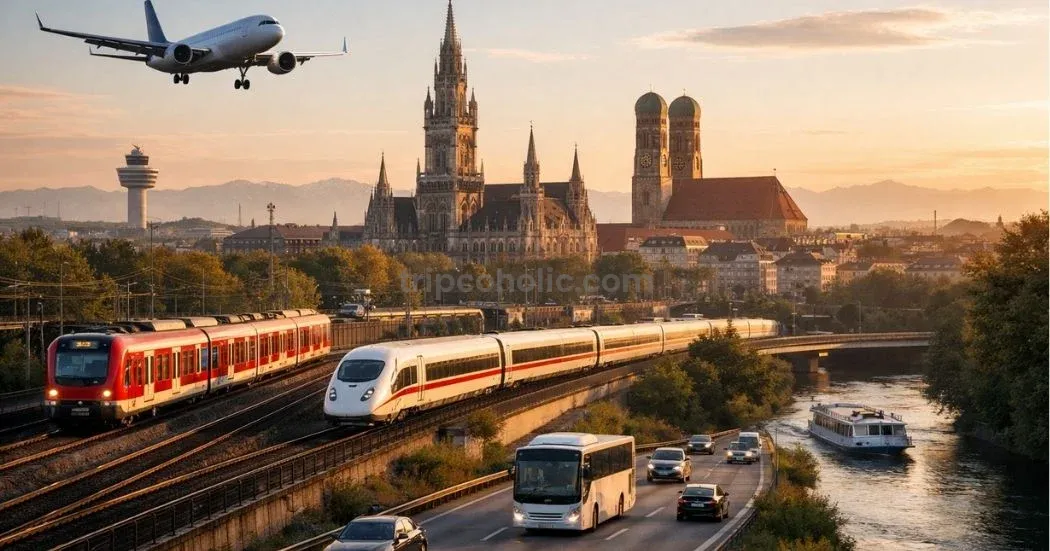

Set in the heart of Bavaria, Munich is one of Germany’s easiest cities to reach thanks to its major international airport, a central rail hub, and fast highway links to neighboring countries. The quickest option is usually flying into Munich Airport (MUC) and taking the S-Bahn straight into the city. If you are comparing prices for a Munich Flight Ticket, it helps to decide first whether you want a direct flight or a one stop connection via a European hub. Overland travelers can arrive by train at München Hauptbahnhof or by coach and car via the Autobahn network. Even sea routes can play a role: ferries bring you to northern German ports, and then Munich is a smooth rail ride away.
Air Travel to Munich
Munich is a true aviation crossroads, especially for Europe. Most travelers land at Munich Airport and head into town on the S1 or S8 S-Bahn lines, which run at short intervals, with a typical trip time of around 40 minutes to the main station.
From Turkey
From Istanbul, Munich is often reachable with either direct flights or very short connections, making it one of the most practical German cities for a weekend break or business trip. Other major Turkish departure points frequently used by travelers include Ankara, Izmir, Antalya, Bodrum, Dalaman, and Adana, depending on season and airline schedules. For airline choices, you will commonly see options involving Turkish Airlines, Lufthansa, Pegasus Airlines, and SunExpress, plus other European carriers on connecting routes.
After landing, the easiest plan is: airport, S-Bahn, city center. If your hotel is near Marienplatz or the main station area, the public transport connection is straightforward and luggage friendly.
From Europe
Munich is extremely well connected across Europe, with frequent departures from city airports and strong links via the biggest hubs. Popular starting points include London, Paris, Amsterdam, Brussels, Vienna, Zurich, Geneva, Prague, Warsaw, Copenhagen, Stockholm, Oslo, Dublin, Lisbon, Madrid, Barcelona, Rome, and Milan.
If you are flexible, midweek flights can be cheaper; if you are traveling for Oktoberfest season or major trade fairs, booking early matters. On arrival, follow signs for S-Bahn and use either S1 or S8 depending on your preferred side of the city; both reach central Munich.
From Asia and the Middle East
Many routes from Asia and the Middle East reach Munich via major hubs. Common departure cities include Dubai, Doha, Abu Dhabi, Riyadh, Jeddah, Tel Aviv, Delhi, Mumbai, Bangkok, Singapore, Tokyo, and Seoul. If you do not see a simple one stop itinerary, try searching with connection points like Frankfurt, Vienna, Zurich, Amsterdam, or Istanbul.
From North America
From North America, Munich can be reached with direct seasonal services on some routes and year round connections through major European gateways. Travelers often start from New York City, Boston, Washington, D.C., Chicago, Los Angeles, Toronto, and Montreal, typically connecting via London, Amsterdam, Frankfurt, or Paris when needed.
From South America
Coming from South America usually means a connection in Spain, Portugal, France, or the Netherlands before heading to Munich. High demand starting points include São Paulo, Rio de Janeiro, Buenos Aires, Santiago, Bogotá, and Lima.
From Africa
From Africa, Munich is commonly reached via North African or European hubs. Typical departure cities include Cairo, Casablanca, Tunis, Algiers, Nairobi, Addis Ababa, Johannesburg, Lagos, and Accra.
From Oceania
From Oceania, Munich is almost always a two stop journey, but it is still smooth if you pick big, reliable hubs. Routes from Sydney, Melbourne, and Auckland often connect through Singapore, Dubai, Doha, or major European capitals.
Road Travel to Munich
Munich is not just a flight destination: it is a classic overland gateway to the Alps, Central Europe, and the rest of Germany. Whether you arrive by train, long distance coach, or car, the city’s main arrival point is München Hauptbahnhof, one of the country’s key rail hubs.
A big advantage of traveling by road or rail is flexibility. You can build a route with stopovers in smaller towns, travel at night on certain services, or bring extra luggage without airline restrictions.
From Turkey
Overland travel from Turkey to Munich is a real adventure that many road trippers still love. The classic driving line starts from Istanbul and continues through Edirne toward Bulgaria via Sofia, then into Serbia via Belgrade, onward to Hungary through Budapest, and then Austria via Vienna before crossing into Germany and reaching Munich. In practice, most drivers break the trip into two or three overnight stops and prepare for tolls, vignette rules, and border checks depending on passports and travel dates.
If you prefer buses, international coach networks often connect from Istanbul and other Turkish cities to Central Europe, with a transfer in hubs like Sofia, Belgrade, Budapest, or Vienna before continuing to Munich. For cost focused travelers, this can be the simplest way to arrive without flying.
From Europe
Within Europe, Munich is a dream by train. Long distance services run on high speed and intercity networks operated by Deutsche Bahn and partners, including ICE and IC routes that link major cities across borders.
Easy rail or road itineraries to Munich include:
- Germany: Berlin, Hamburg, Cologne, Frankfurt, Stuttgart, and Nuremberg
- Nearby borders: Salzburg, Innsbruck, Basel, Milan, Verona, Venice, and Ljubljana
- Central and Eastern Europe: Bratislava, Kraków, Zagreb, and Sarajevo
For drivers, Munich sits near key Autobahn arteries like the A8 and A9, so road trips from Austria, Switzerland, northern Italy, and southern Germany are especially straightforward. For budget travelers, FlixBus and similar coach operators cover a wide web of European cities and often arrive close to the main station area.
From Asia
If you are arriving from Asia by air into a European gateway, turning the last leg into a road or rail trip can be surprisingly enjoyable. For example, fly to Vienna or Zurich, then take a scenic train into Munich; or land in Frankfurt and continue by ICE to avoid a second flight. This approach is also helpful if you want to stop in mountain towns, lakeside villages, or Christmas markets along the way.
From North America
Many North American travelers choose a multi city itinerary: fly into one European city, explore, then reach Munich by train or bus. A common pattern is landing in London or Paris, spending a few days, and continuing overland through cities like Brussels or Amsterdam before finishing in Munich.
From South America
From South America, you can build an overland finish after arriving in Madrid, Lisbon, or Paris. A rail plus bus mix can bring you through multiple countries without the stress of repeated airport transfers, which is ideal if your main goal is an extended Europe tour ending in Bavaria.
From Africa
From Africa, road travel typically starts after you land in a European hub such as Paris, Amsterdam, or Frankfurt. From there, Munich is a well connected rail destination and a logical stop before heading toward Austria, Switzerland, or northern Italy.
From Oceania
From Oceania, the overland option is best used as the final chapter of a longer European journey. Many travelers fly into a hub like London or Amsterdam, travel for a couple of weeks by train, and finish in Munich for its museums, beer gardens, and easy day trips into the Alps.
Sea Travel to Munich
Munich is inland, but sea travel can still be part of your route if you love ferries, want to bring a car, or prefer a slower, scenic journey. The basic idea is simple: arrive at a northern German port by ferry, then continue to Munich by train or car.
Popular German ferry gateways include ports around Kiel, Lübeck (especially Travemünde), and Rostock. Operators such as TT-Line connect Travemünde and Rostock with Scandinavian ports like Trelleborg.
From Turkey
A ferry based route from Turkey usually means combining short sea crossings in the Aegean with overland travel through Europe. Many travelers start with island routes to Greece, continue by bus or car through the Balkans, and then use rail or road to reach Munich. It is not the fastest plan, but it is memorable, especially if you treat the journey as part of the vacation.
From Europe
Sea travel is most practical from Northern Europe. Sweden to Germany is a classic: crossings like Trelleborg to Rostock can take roughly 6 to 7 hours, while Malmö to Travemünde is often around 9 hours, depending on the sailing.
From Helsinki, long distance ferries to Travemünde operate with travel times around 30 hours, turning the trip into a mini cruise with cabins and onboard facilities. There is also a well known overnight ferry between Kiel and Oslo, with arrivals the next morning, which can be a relaxing way to move between Norway and Germany before heading south to Munich.
From Asia
For travelers coming from Asia, sea travel to Germany usually makes sense only as a European add on: fly into Stockholm, Helsinki, or Copenhagen, enjoy a ferry to a German port, then continue to Munich by train. This can be a great option if you want to travel with extra luggage, sports gear, or a rental car.
From North America
From North America, the most realistic sea option is to incorporate a ferry after you arrive in Europe. For example, fly into London or Amsterdam, explore the north, take a Baltic ferry segment for the experience, and then finish in Munich overland.
From South America
South American travelers often start in Iberia, but if you are planning a long trip, you can still add a ferry leg later in the journey. Think of sea travel as a special chapter, not the backbone: one memorable crossing, then a fast train south to Bavaria.
From Africa
From Africa, sea routes are mostly relevant after you reach Europe. If your itinerary includes Scandinavia or the Baltic, adding a ferry to a German port can save a flight and give you a restful night onboard before continuing to Munich.
From Oceania
From Oceania, sea travel works best for slow travel fans who want to stitch together a multi country route. After flying into Europe, you can use ferries across the Baltic or between Scandinavia and Germany, and then head down to Munich by rail.
Munich rewards good planning because it is one of those cities where the journey can match the destination: a quick airport transfer puts you in the center for museums and beer halls, a train ride can drop you right into the heart of town near your hotel, and even a ferry based route can turn your arrival into a story worth telling. Choose flights if time is tight, choose rail if you want comfort and city center access, and choose road or sea legs if you are building a bigger European adventure with stopovers and scenery. Plan your trip today with Munich Flight Ticket , Munich Bus Ticket and Munich Ferry Ticket.