What To Eat In Marmaris?


Marmaris is a coastal town where pine covered hills meet deep blue bays and daily life flows in harmony with the sea. Its cuisine is shaped by the Aegean climate, fertile valleys, and a long tradition of fishing and olive oil cooking. Fresh ingredients, simple techniques, and respect for seasonality define the local table. For travelers wondering what to eat in Marmaris, food here is not just nourishment but a way to understand the region’s culture and rhythm. Long breakfasts, slow dinners, and shared meze tables are part of everyday life. This Marmaris food guide highlights the most iconic local flavors you should experience while exploring the town.
Cokertme Kebab: Crispy Potatoes and Yogurt Harmony
Cokertme Kebab is one of the most recognizable regional dishes of Mugla province and a favorite among visitors. Thinly sliced beef or lamb is quickly sauteed until tender, then layered over crispy matchstick fried potatoes. The dish is finished with garlicky yogurt and warm tomato butter poured on top. The contrast between crunchy potatoes, juicy meat, and cool yogurt creates a deeply satisfying bite. Locals often order it as a filling dinner after a long day by the sea. When asking what to eat in Marmaris, this dish always comes up first.
Zucchini Blossom Dolma: Aegean Olive Oil Elegance
Zucchini Blossom Dolma is a refined olive oil dish that reflects the lighter side of Marmaris local cuisine. Blossoms are harvested early in the morning and filled with aromatic rice mixed with herbs like dill and mint. They are slowly cooked in olive oil until soft and fragrant. Served at room temperature, the flavor is delicate, slightly floral, and refreshingly fresh. This dish is especially popular in summer and often appears as part of a meze spread. It is a must for anyone exploring Marmaris local dishes beyond grilled meats.
Mugla Kofte: Simple and Juicy Local Meatballs
Mugla Kofte is known for its minimal seasoning and emphasis on meat quality. The kofte are shaped thin and grilled over charcoal, giving them a light smoky aroma. Served with grilled peppers, tomatoes, and fresh bread, it is honest comfort food. The inside remains juicy while the outside develops a gentle crust. Locals enjoy it for lunch or an early dinner without fuss. It is an essential stop in any Marmaris food guide focused on traditional flavors.
Keskek: Slow Cooked Wheat and Meat Tradition
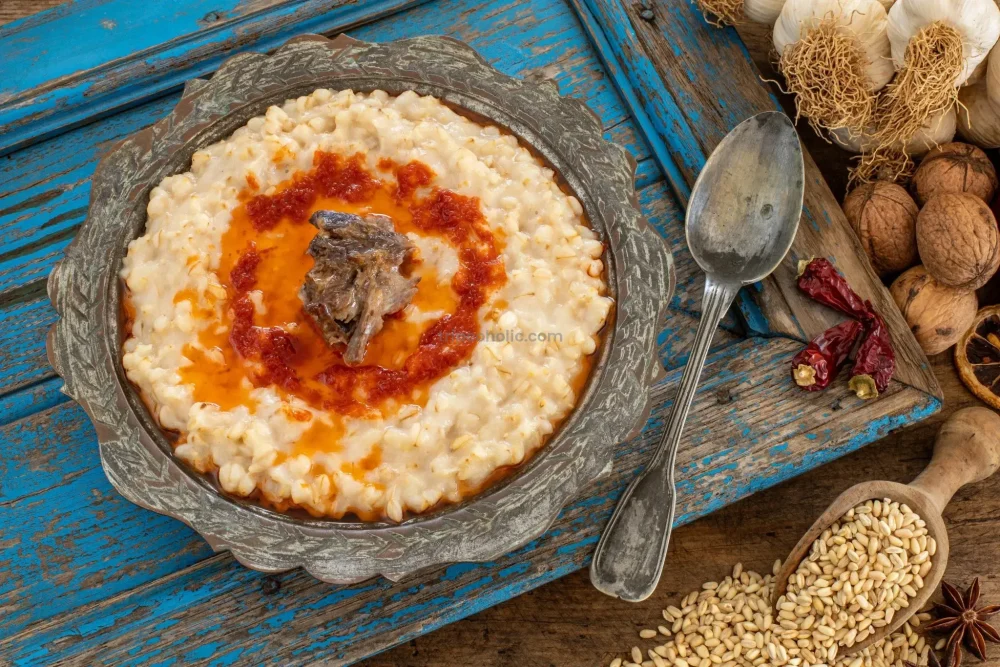
Keskek is a ceremonial dish made from cracked wheat and slow cooked meat, usually lamb or chicken. The mixture simmers for hours until it becomes creamy and unified. Butter and mild spices are added at the end for richness. The taste is comforting, nutty, and deeply warming. Often associated with celebrations, it carries a sense of community and heritage. Trying Keskek adds cultural depth to your search for what to eat in Marmaris.
Grilled Octopus: Taste of the Aegean Sea
Grilled Octopus is one of the most memorable seafood options in Marmaris. The octopus is first tenderized, then grilled over high heat to create charred edges. Finished with olive oil, lemon, and oregano, it highlights the natural sweetness of the sea. The texture is firm yet tender, with a pleasant smoky finish. It pairs beautifully with a cold meze plate and sea views. Seafood lovers should not skip this dish when building their Marmaris food guide.
Fried Calamari: Light and Golden Favorite
Fried Calamari is a popular appetizer enjoyed across Marmaris. Fresh squid rings are lightly floured and fried quickly to stay tender. The coating is thin and crisp, never heavy. Served with lemon and yogurt based sauce, it balances richness with freshness. The mild sweetness of the calamari shines through each bite. It is a reliable choice when sharing plates by the sea.
Shrimp Casserole: Sizzling Garlic Pleasure
Shrimp Casserole arrives at the table bubbling hot in a clay dish. Shrimp are cooked with butter, garlic, tomatoes, peppers, and mild spices. The aroma fills the air instantly and invites everyone to reach for bread. The sauce is rich yet balanced, and the shrimp remain tender. It is one of the most ordered hot appetizers in Marmaris evenings. This dish adds warmth and indulgence to any Marmaris food guide.
Grilled Sea Bass: Freshness on the Grill
Grilled Sea Bass is a showcase of Marmaris seafood quality. The fish is usually cooked whole, simply seasoned with salt and olive oil. Grilling gives the skin a crisp texture while keeping the flesh moist. Lemon is added just before serving to brighten the flavor. Clean, light, and satisfying, it reflects the essence of coastal dining. It is a cornerstone of what to eat in Marmaris for fish lovers.
Aegean Herb Salad: Wild Greens and Olive Oil
Aegean Herb Salad is made with seasonal wild greens gathered from the surrounding hills. The greens are lightly cooked or blanched, then dressed with olive oil and lemon. The taste is slightly bitter, herbal, and refreshing. Sometimes yogurt or garlic is added for depth. It is light but nourishing and reflects the region’s connection to nature. This dish is key to understanding Marmaris local cuisine.
Pine Honey: Forest Flavor of Marmaris
Marmaris Pine Honey is famous across Turkey for its deep, resinous aroma. Produced from pine forests surrounding the region, it has a darker color and complex taste. Locals enjoy it at breakfast with cheese or stirred into herbal tea. The flavor is rich, slightly caramelized, and long lasting. It also makes a meaningful edible souvenir. No Marmaris food guide is complete without tasting this local treasure.
Raki: The Ritual Drink of the Coast
Raki is the traditional anise flavored spirit enjoyed with long dinners and meze tables. Mixed with water, it turns milky and aromatic. It is sipped slowly, never rushed, and always accompanied by food. In Marmaris, raki evenings often last for hours by the sea. It is less about drinking and more about sharing time. Experiencing raki is part of understanding what to eat in Marmaris as a whole.
Lokma Dessert: Sweet Ending in Small Bites
Lokma Dessert consists of small fried dough balls soaked in syrup. Crispy on the outside and soft inside, they are best eaten hot. The syrup adds sweetness without heaviness. Sometimes cinnamon or sesame is sprinkled on top. Locals often share lokma after dinner with tea or coffee. It is a joyful and simple way to end a meal in Marmaris.
Eating in Marmaris is an experience shaped by the sea, the forest, and generations of culinary tradition. Each dish tells a quiet story of place and season, whether it comes from a fishing boat or a village kitchen. Use this Marmaris food guide to plan your meals with curiosity and balance. Between tastings, explore the coastline, bazaars, and nearby villages to deepen the experience. After enjoying these flavors, you can continue planning with our Marmaris Travel Guide and Places to Visit in Marmaris articles to complete your journey.